So I’ve been thinking about your Spanish pottery thing again — like, the whole “how do I actually take care of this stuff without treating it like a museum artifact or, you know, accidentally destroying it while wiping down the counter.”
First — cleaning. Hand‑washing is still the safest move for most traditional Spanish ceramics, especially the hand‑painted ones from Talavera or Manises. The glazes are strong but not superhero strong. Dishwashers can be fine for some modern pieces, but only if the maker says so. And even then, top rack, gentle cycle, no boiling‑lava‑heat‑dry setting. I once put a bowl in a dishwasher that sounded like a jet engine & smelled faintly like burnt toast… the bowl survived but I swear the pattern faded a tiny bit. Or maybe that was just me being dramatic.
Now — chips. Should you repair them? Honestly… depends. Tiny chips on the rim of a plate? You can smooth them with a little 600‑grit wet/dry sandpaper (very gently, like you’re petting a nervous cat). If the chip is bigger & the piece is decorative, you can use a two‑part epoxy + a bit of enamel paint to fill & color-match. But if it’s a piece you eat from, I’d skip the DIY fixes. Food-safe repairs are a whole different thing, and most home kits aren’t rated for that. Also, weird micro-opinion: I actually like a tiny chip on a well-loved bowl. Gives it character. Not “drop it on the floor” character, but you know what I mean.
Speaking of food safety — if you ever buy older Spanish pottery (like vintage Talavera or anything pre‑1990-ish), get it tested for lead. Seriously. Some older glazes were gorgeous but… yeah. Not ideal for your morning cereal. You can get a lead test kit at a hardware store, but if you want a real answer, send a sample to a lab. Modern Spanish ceramics from reputable workshops are almost always food-safe, but if a piece is purely decorative, assume it’s decorative unless the maker says otherwise. I once used a decorative jug as a water pitcher at a dinner party & someone said the water tasted “liike metal.” Never again.
Stacking plates — okay, this is where people get reckless. Don’t stack hand-painted plates directly on top of each other unless you want little micro-scratches on the glaze. Put a thin felt pad or even a paper napkin between each one. Same with bowls. And don’t stack too high; the weight adds up & the bottom plate gets cranky. I know it’s annoying, but so is replacing a plate you love.
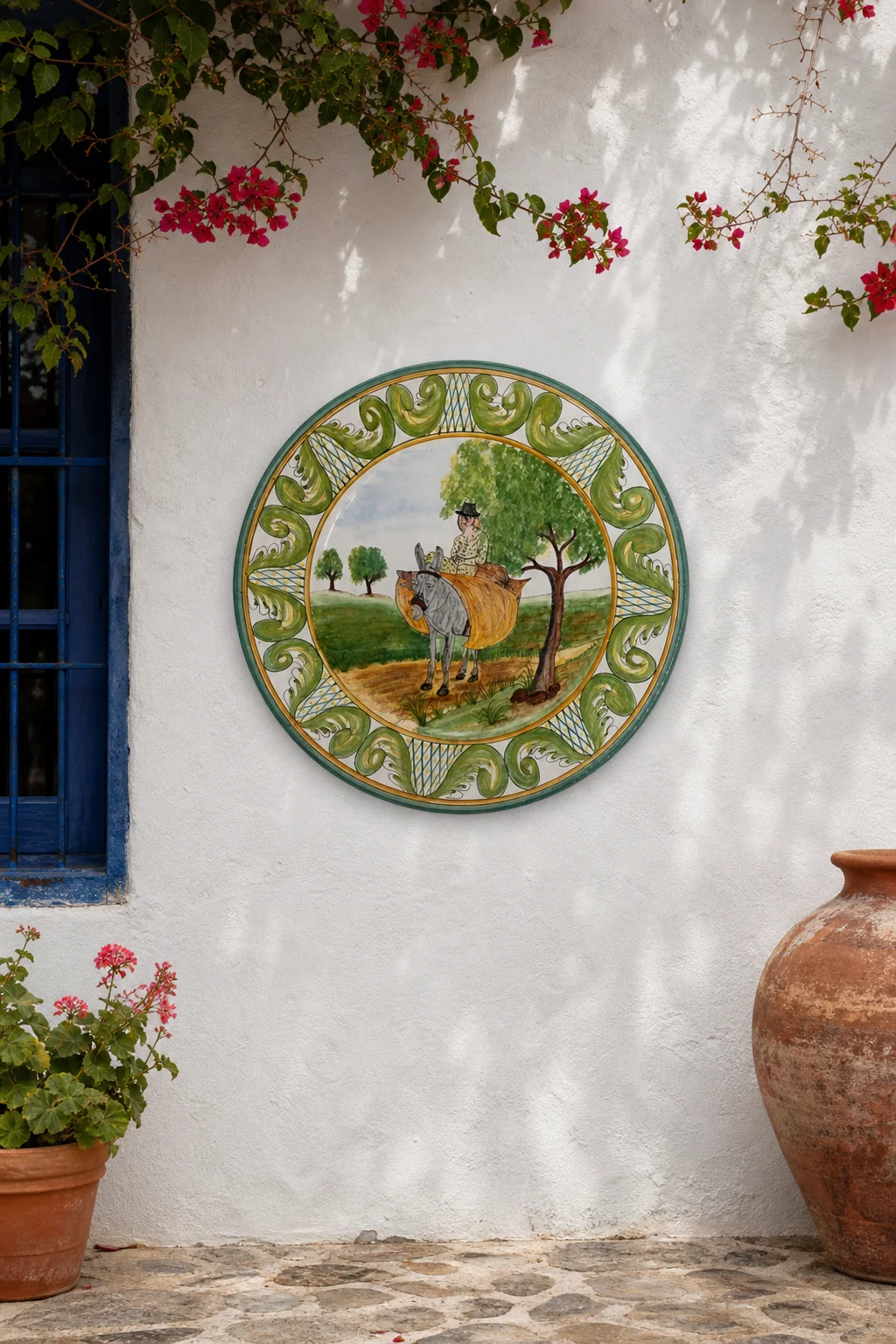
Hanging plates — super cute, super Spanish, but do it right. Use padded plate hangers, not the metal claw ones that dig into the rim. Or better: those adhesive disc hangers that stick to the back. They hold surprisingly well (I’ve had one up for years), but make sure the surface is clean before sticking it on. Also, check the weight rating. Don’t hang a 2‑kilo platter on a disc meant for a teacup saucer unless you enjoy the sound of crashing ceramics at 3 a.m. (and the weird phantom smell of dust that follows).
Transporting pottery — wrap each piece individually. Bubble wrap is great, but the trick is to wrap the handles & rims first. Those are the weak points. Then put the piece in a box with crumpled paper around it, not packing peanuts (they shift too much). And if you’re moving house, double-box the really precious stuff. I once moved with a box of bowls on my lap because I didn’t trust the movers. My legs went numb but the bowls survived.
Regional differences — okay, this part is fun. Spanish pottery isn’t one thing. Talavera (Castilla-La Mancha) tends to have thick glazes & bold patterns — sturdy but still needs gentle care. Andalusian ceramics (like from Granada) often have those metallic luster glazes, which scratch more easily, so no stacking without padding. Valencia’s Manises pieces can be delicate around the edges, especially the older ones. Catalan terracotta (like the classic cazuelas) is tough but hates thermal shock — don’t take it from fridge to flame or vice versa. Let it warm up slowly, like a sleepy cat in the sun.
Oh — thermal shock in general. Biggest pottery killer. Don’t pour boiling water into a cold pitcher. Don’t put a hot dish on a cold marble countertop. Don’t microwave something that has a hairline crack unless you want it to explode like a tiny ceramic volcano. Just… be gentle with temperature changes. Slow transitions. Like easing into a pool instead of cannonballing.
Random anecdote: I once set a freshly baked tortilla española on a ceramic platter that had been sitting near an open window in winter. The platter made a tiny “tink” sound — like a polite protest — & then split clean in half. I just stood there holding a spatula, smelling onions & regret. So yeah. Temperature matters.
Anyway, Spanish pottery is meant to be used & loved. It’s not fragile in a precious way — just in a “treat me like a living thing” way. And honestly, the more you use it, the more you learn its quirks. Which pieces like heat, which ones prefer being decorative, which ones stack nicely, which ones chip if you look at them wrong. It’s like getting to know people.
Now I’m wondering — do you want to add a section about long-term storage too, or is that overkill…