














How to Display Fragile Vintage Ceramics Safely in High-Traffic Rooms
How to Display Fragile Vintage Ceramics Safely in High-Traffic Rooms
To display fragile vintage ceramics safely in high-traffic rooms, you must anchor the pieces using museum wax, utilize enclosed glass cabinets, and position them above the physical “bump zone” of pets, children, and guests. Implementing these structural safeguards allows you to showcase your prized collection without risking catastrophic chips or breaks.
Verifying the authenticity, age, and structural integrity of your vintage ceramics before staging them is essential for long-term preservation. Genuine hand-painted Spanish pottery, mid-century earthenware, and delicate majolica glazes react uniquely to environmental stressors. Knowing exactly what material you are handling helps you apply the correct weights, adhesives, and mounting heights to protect its monetary and historical value.
Step-by-Step Safeguarding and Verification Workflow
Before placing any vintage piece in a bustling living room or hallway, perform a rigorous structural audit and securement process. Follow these sequential steps to ensure your ceramics remain immovable and safe.
1. Conduct a Structural Soundness Audit
Examine the base and body of the ceramic item under bright, direct light. Check for hairline fractures, previous repairs, or unstable glaze flaking that could fail under micro-vibrations from foot traffic. Tap the piece gently with a fingernail; a clear, ringing tone indicates structural integrity, while a dull thud warns of internal cracks.
2. Prep the Display Surface
Clean the shelf, mantel, or cabinet surface thoroughly to remove all dust, oils, and polish residues. Stable surfaces like solid wood, anchored metal shelves, or heavy stone mantels provide the best foundation. Avoid placing delicate items on lightweight, freestanding accent tables that wobble easily when brushed past.
3. Apply Professional Museum Wax
Roll three or four small, pea-sized balls of clear museum wax or microcrystalline gel between your fingers to warm them. Place these spheres evenly around the bottom rim of the ceramic piece. Press the item firmly onto the shelf with a slight twisting motion until it resists shifting.
4. Elevate Above the Hazard Zone
Measure the height of your display shelves to ensure fragile items sit at least 55 inches above the floor. This elevation keeps your collection safely out of range from swinging bags, running pets, and curious toddlers. Reserve lower shelves for heavier, non-fragile decor elements.
Structural Safety & Preservation Note: Antique glazes and porous earthenware clays can degrade if exposed to direct chemical adhesives or prolonged moisture. Never use permanent glazes, hot glue, or standard double-sided tape to secure vintage ceramics, as these will tear away the historic makers’ marks and bottom glazes upon removal.
Material Comparisons and Strategic Styling Solutions
Different ceramic types demand distinct staging environments based on their durability and weight distribution. Earthenware and delicate terracotta pieces possess higher porosity and are prone to chipping if bumped, requiring fully enclosed glass display cases. In contrast, high-fired stoneware and vitrified porcelain offer greater structural density, making them slightly more resilient on open floating shelves when properly secured with wax.
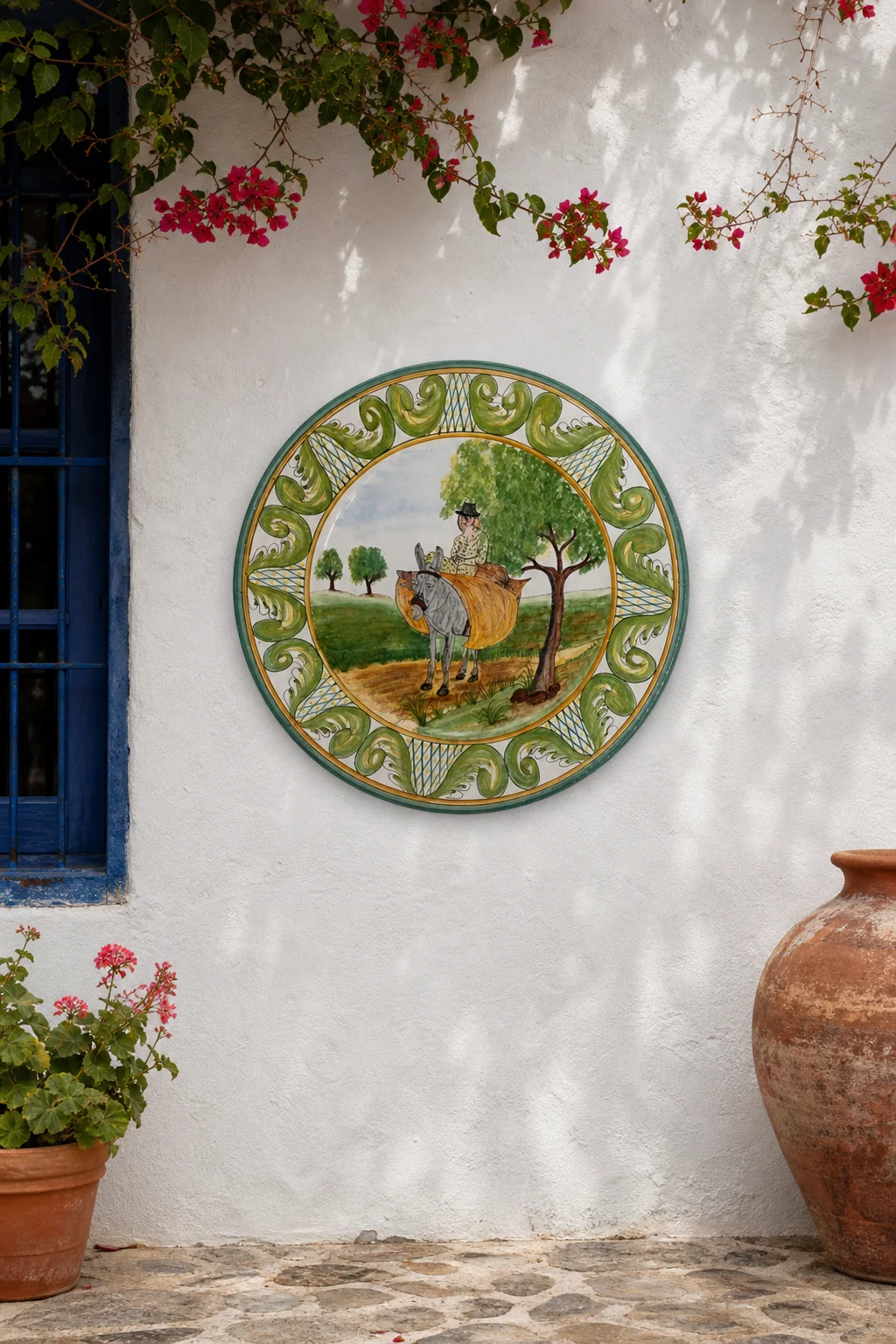
If you love the warm, sun-drenched aesthetic of Mediterranean decor but worry about open-air hazards, strategic placement is your best tool. Integrating pieces from an authentic, hand-painted Spanish pottery collection into built-in recessed wall niches provides a stunning visual focal point while offering natural structural walls that shield the clay from accidental side impacts. For high-traffic entryways and dining areas, mixing these secured statement pieces alongside heavy wrought-iron accents or solid wood frames creates a balanced, stable vignette that preserves your heirloom ceramics for generations to come.