















How to Display Vintage Spanish Bowls as Beautiful Non-Food Centerpieces
To display vintage Spanish bowls as non-food centerpieces, elevate them to the focal point of your space by using structural filler elements, creating dynamic asymmetrical groupings, or mounting deep lebrillo bowls on iron tabletop stands. Utilizing these hand-painted ceramics for purely decorative styling safeguards their delicate finishes while infusing your home with immediate Mediterranean warmth and rustic texture.
Repurposing antique earthenware for non-food displays allows you to celebrate the historic craftsmanship of regional Spanish artisans without subjecting vulnerable, historic glazes to the moisture, acids, and knife scrapes of daily dining. Preserving these vessels in low-wear decorative roles ensures that their intricate geometric patterns, cobalt blues, and vibrant green motifs remain vibrant for generations to come.
3 Creative Ways to Style Your Spanish Ceramic Centerpiece
Transforming a deep bowl into a striking visual anchor requires balancing the scale of the pottery with its internal elements. Use these three curation strategies to maximize visual impact on dining tables, entry consoles, or open shelving units.
1. Architectural Fillers and Natural Textures
Fill the cavity of a wide Spanish lebrillo bowl with contrasting structural objects to create depth. Large dried artichoke heads, preserved moss spheres, or hand-bleached wooden beads offer an organic contrast to the glossy ceramic glaze. Keep the elements large and minimal so the intricate internal brushwork of the pottery remains partially visible.
2. The Asymmetrical Trio Grouping
Cluster three vintage bowls of varying diameters and heights at the center of your table to form a cohesive vignette. Place the largest bowl flat on the surface, elevate the medium bowl slightly on a stack of linen-bound art books, and tilt the smallest bowl forward. This tiered arrangement guides the eye through different planes and showcases the unique profiles of each handmade piece.
3. Elevated Display on Wrought Iron Stands
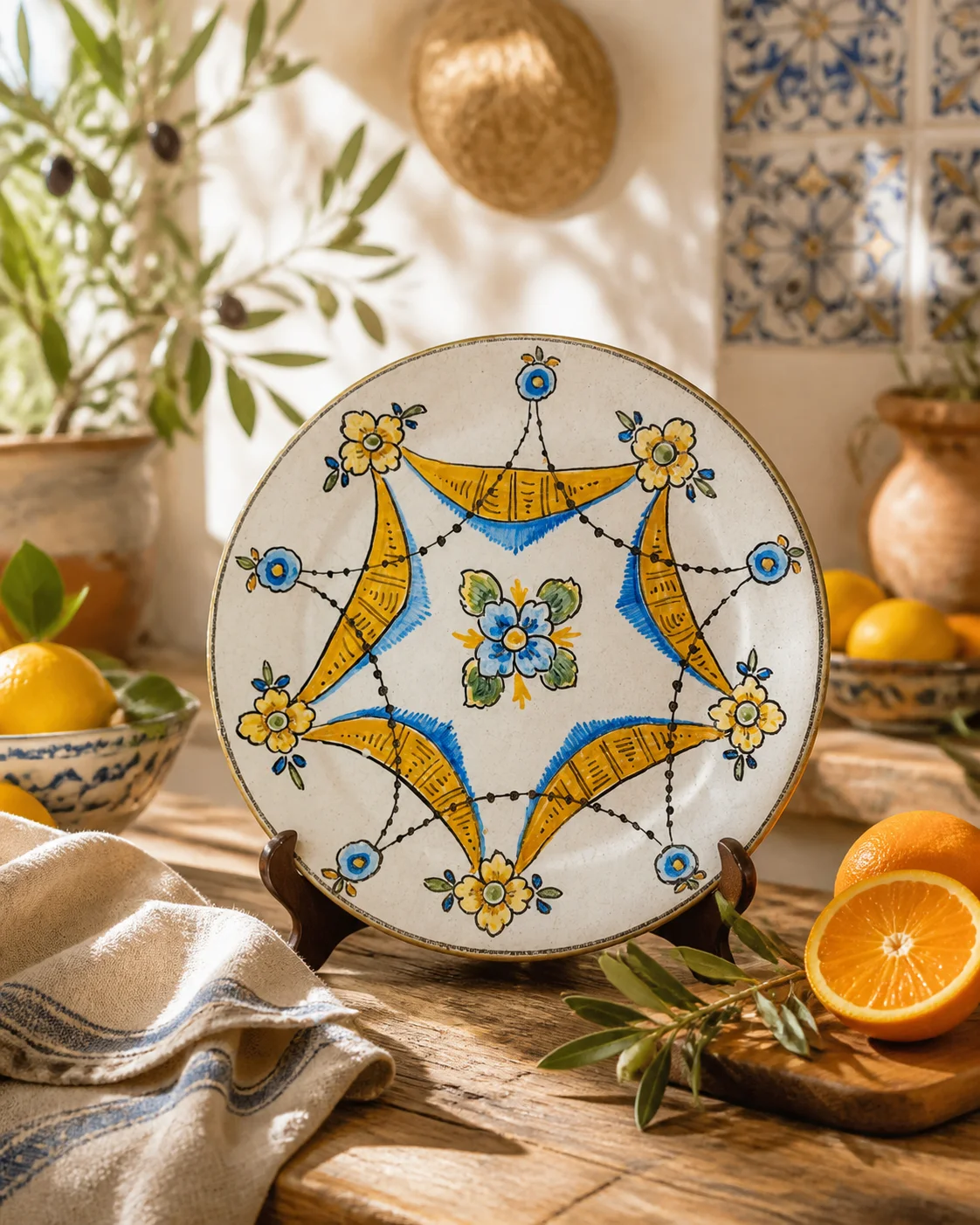
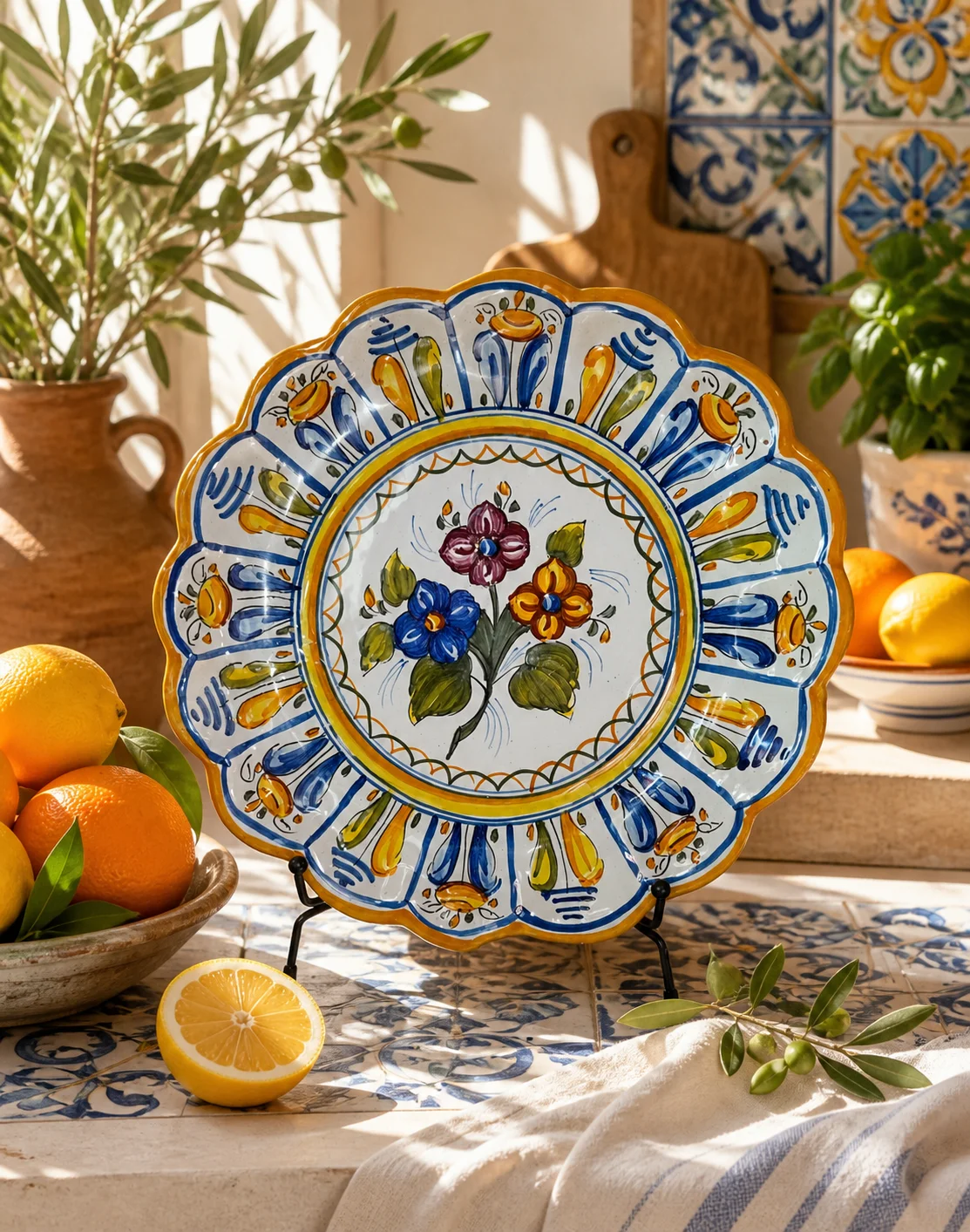
Lift a shallow, wide-rimmed bowl off the tabletop using a low, custom-fitted wrought iron display easel. Elevating the pottery vertically allows the interior hand-painted designs to face outward toward guests rather than staring up at the ceiling. This technique works exceptionally well on narrow fireplace mantels or console tables where surface depth is highly limited.
Care & Preservation Note: Antique and mid-century Spanish glazes can be significantly more delicate than modern commercial equivalents. Avoid using internal adhesives, floral foam, or wet materials directly against the raw terracotta or glazed surfaces, and dust solely with a dry microfiber cloth.
Choosing the Right Era and Materials for Dynamic Decor
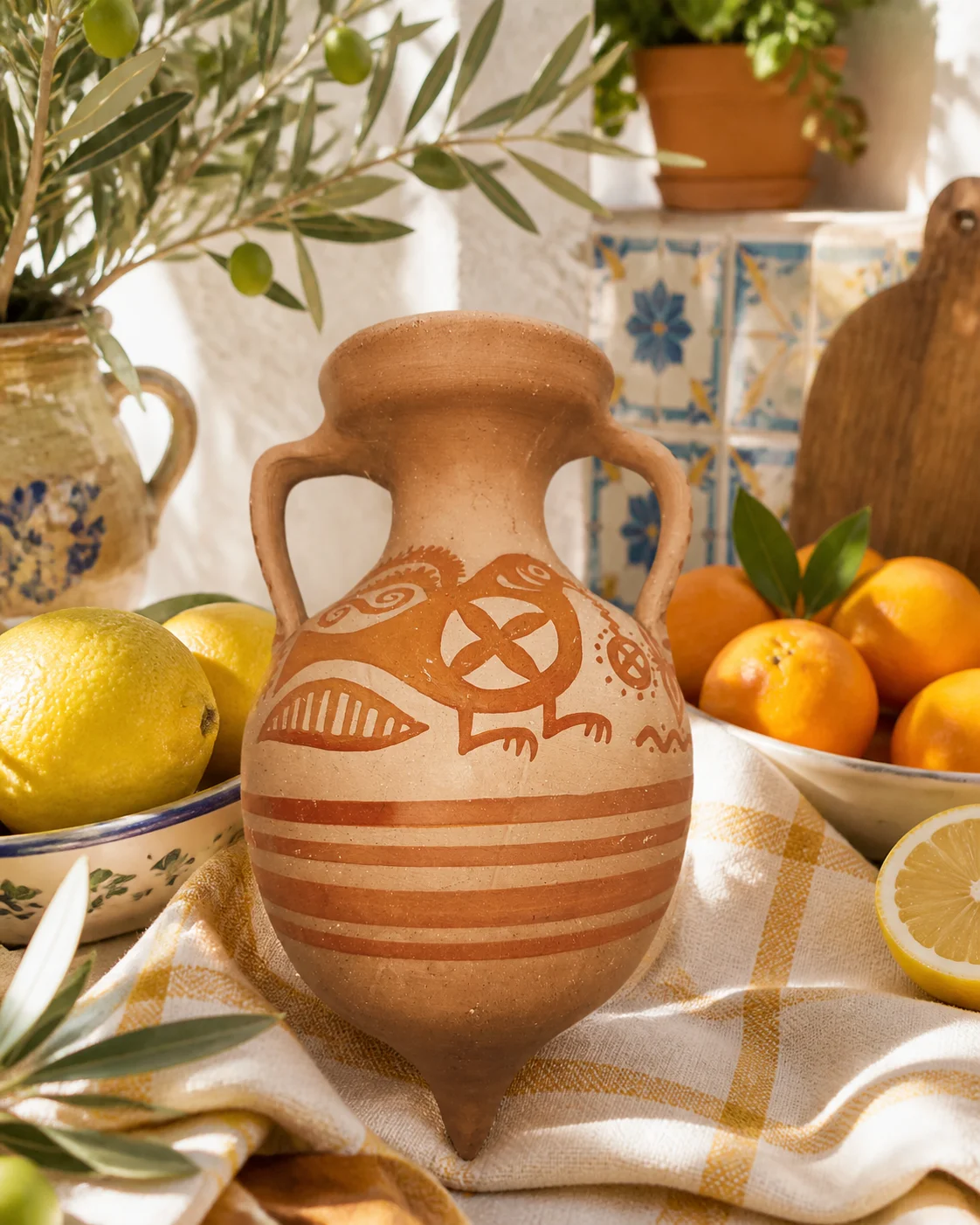
When selecting pieces for your home, mixing textures like the matte, unglazed terracotta exteriors of classic Andalusian pottery with highly reflective, metallic-tinged Manises glazes creates excellent visual tension. For a curated look that feels collected over time rather than mass-produced, focus on finding authentic, regional works from different decades.
Because authentic pieces are entirely handmade, our curated Vintage Bowls Collection consists strictly of one-of-a-kind artisan finds, meaning our available stock changes continuously as unique historical pieces are discovered and acquired. Integrating these rare, time-worn vessels alongside sleek, modern home accents ensures your centerpiece becomes an instant conversation starter rooted in Spanish history.
Frequently Asked Questions
Q: Can I use vintage Spanish bowls to hold live plants or floral arrangements?
A: It is best to avoid direct contact with water or wet soil, but you can place a water-tight plastic liner inside the bowl to safely hold potted succulents or dry air plants.
Q: How can I tell if my vintage Spanish bowl is authentic or a modern reproduction?
A: Look for subtle irregularities in the clay shape, visible brushstrokes on the glaze, unglazed bases showing reddish-pink terracotta, and regional maker marks or signatures on the bottom.
Q: Is it safe to leave a vintage ceramic centerpiece in direct sunlight?
A: While high-fired ceramic glazes generally resist fading, prolonged exposure to intense UV rays can stress older, micro-fractured glazes, so placing them in indirect sunlight is ideal.
To ensure your new centerpiece remains stable on smooth tabletops, always place small, self-adhesive felt pads or clear silicone bumpers on the unglazed footed ring of your vintage bowl to prevent accidental sliding and protect your wooden furniture from scratches.