














04Nov
How to Spot Genuine Mid-Century Spanish Pottery vs. Modern Reproductions
To spot genuine mid-century Spanish pottery, look for an irregular unglazed base showing red-orange terracotta or buff clay, hand-painted brushstrokes that vary in ink thickness under a crackled tin glaze, and incised or hand-brushed maker’s marks rather than uniform, laser-printed stamps. True mid-century pieces from the 1950s through the 1970s carry the subtle, organic irregularities of manual craftsmanship that mass-produced modern fakes simply cannot replicate.
Verifying authenticity is vital because authentic Spanish mid-century ceramics have skyrocketed in value, making them prime targets for clever modern imitations. Discerning collectors must rely on physical properties rather than face-value appearances to ensure they are investing in genuine Mediterranean heritage.
Step-by-Step Authentication Workflow
1. Examine the Base and Exposed Clay Body
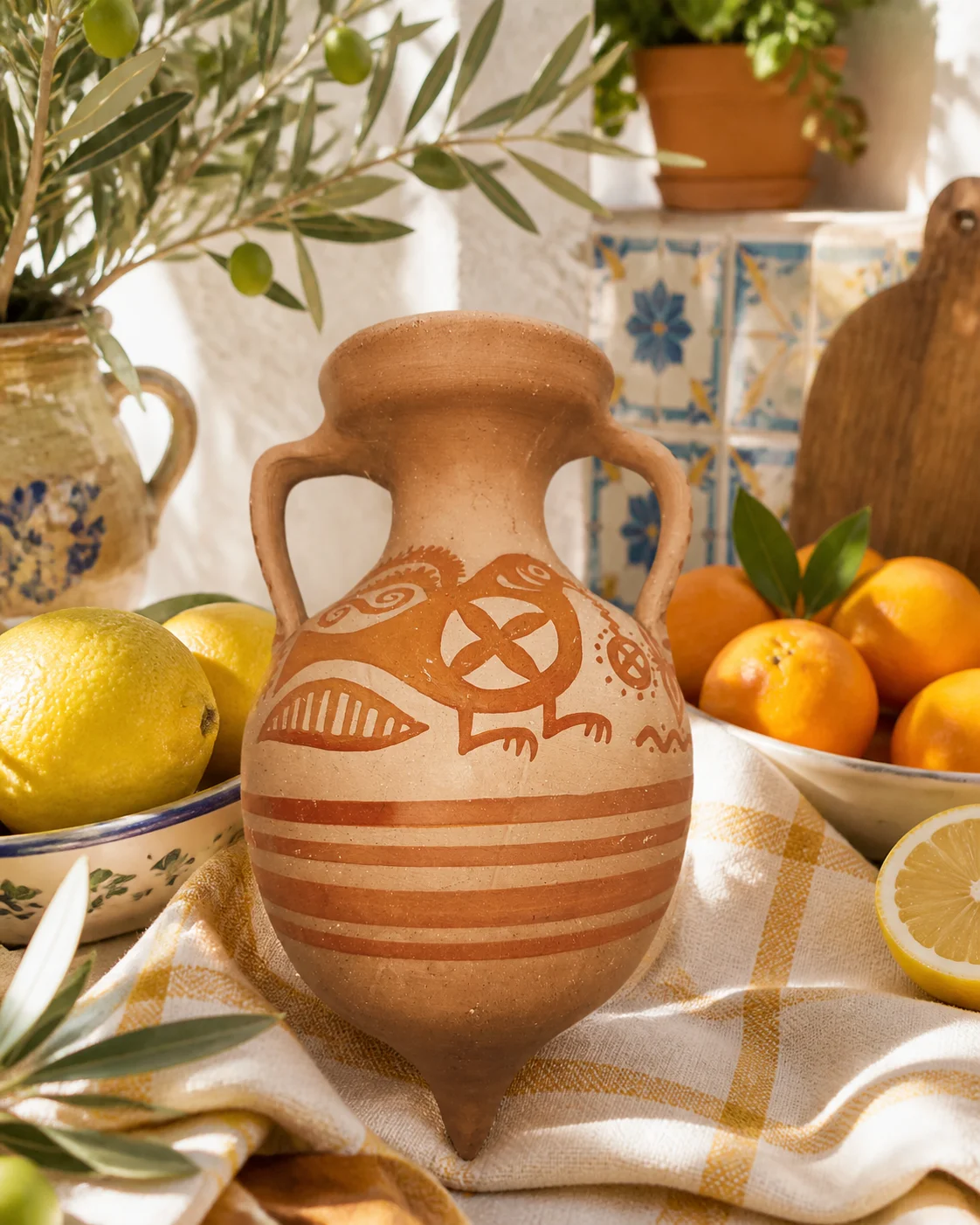
Turn the piece upside down to inspect the raw, unglazed foot rim. Authentic mid-century Spanish ceramics primarily utilized local red earthenware or coarse buff clay, which will feel slightly textured and dry. Modern reproductions frequently use highly refined, smooth white slip-cast ceramic bodies that look uniform and flawlessly circular.
Turn the piece upside down to inspect the raw, unglazed foot rim. Authentic mid-century Spanish ceramics primarily utilized local red earthenware or coarse buff clay, which will feel slightly textured and dry. Modern reproductions frequently use highly refined, smooth white slip-cast ceramic bodies that look uniform and flawlessly circular.
2. Analyze the Glaze Quality and Crazing
Inspect the surface under direct light to check for authentic aging. True mid-century glazes often exhibit “crazing”—a network of fine, microscopic cracks beneath the glass layer caused by decades of gradual temperature changes. Reproductions often use artificial surface washes or lack this depth entirely, featuring a perfectly uniform, high-gloss synthetic coat.
Inspect the surface under direct light to check for authentic aging. True mid-century glazes often exhibit “crazing”—a network of fine, microscopic cracks beneath the glass layer caused by decades of gradual temperature changes. Reproductions often use artificial surface washes or lack this depth entirely, featuring a perfectly uniform, high-gloss synthetic coat.
3. Critique the Maker’s Marks and Stamps
Study how the country-of-origin or artisan signature was applied to the bottom of the vessel. Genuine mid-century pieces from workshops like Partenon or regional studios in Talavera and Manises feature marks that are hand-painted in blue underglaze, stamped with a physical rubber die, or incised directly into the wet clay. Look out for the following red flags:
Study how the country-of-origin or artisan signature was applied to the bottom of the vessel. Genuine mid-century pieces from workshops like Partenon or regional studios in Talavera and Manises feature marks that are hand-painted in blue underglaze, stamped with a physical rubber die, or incised directly into the wet clay. Look out for the following red flags:
Perfect Symmetry: Laser-crisp, perfectly centered backstamps indicate computer-guided modern manufacturing.
Inkjet Texture: Zoom in with a magnifying glass; modern fakes reveal a fine dot matrix or reticle printing pattern.
Overglaze Application: If the mark sits completely on top of a glossy finish and can be caught with a fingernail, it was likely applied long after production.
Inkjet Texture: Zoom in with a magnifying glass; modern fakes reveal a fine dot matrix or reticle printing pattern.
Overglaze Application: If the mark sits completely on top of a glossy finish and can be caught with a fingernail, it was likely applied long after production.
4. Evaluate Paint Execution and Tool Marks
Run your fingers along the painted motifs to check the artisan’s technique. Genuine mid-century decorators applied slips and oxides by hand, leaving behind visible brushstrokes with natural variations in paint thickness, pooling, and texture. Modern fakes rely on digital decals or stencil transfers, resulting in flat, sterile patterns with perfectly identical line widths.
Run your fingers along the painted motifs to check the artisan’s technique. Genuine mid-century decorators applied slips and oxides by hand, leaving behind visible brushstrokes with natural variations in paint thickness, pooling, and texture. Modern fakes rely on digital decals or stencil transfers, resulting in flat, sterile patterns with perfectly identical line widths.
Care & Preservation Note: Mid-century glazes can be more delicate than modern equivalents; avoid abrasive scouring pads or harsh chemical cleaners. To preserve the original glaze integrity and prevent further deep crazing, clean your vintage Spanish ceramics exclusively with lukewarm water and a mild, pH-neutral soap.
Material Comparisons and Styling Alternatives
When curating your collection, it is helpful to contrast vintage composition styles against contemporary manufacturing habits to find your footing:
| Feature | Mid-Century Originals (1950s–1970s) | Modern Reproductions (Present Day) |
|---|---|---|
| Clay Composition | Coarse red terracotta, earthy iron-rich stoneware, or textured buff clay. | Flawless white porcelain, liquid slip-cast clay, or lightweight stoneware. |
| Weight Profile | Substantial, hefty, and slightly unbalanced due to hand-throwing. | Lightweight, thin-walled, and perfectly uniform in weight distribution. |
| Production Method | Hand-thrown on a wheel or hand-pressed into regional master molds. | Mass-produced via industrial automated slip-casting jigs. |
If you love the sun-drenched aesthetic of the Iberian peninsula but are not ready to dive into the high-stakes antique market, consider sourcing from our dedicated Spanish Pottery Collection. This curated alternative bridges the gap perfectly, showcasing authentic, hand-painted contemporary pieces made by multi-generational family workshops that still honor the exact traditional techniques of past eras.