














How to Identify Spanish Pottery Marks
Spanish pottery marks can be fascinating, but they are not always easy to read. A stamp may be faded, a signature may look like a scribble, or the base may be covered by glaze and wear. Even so, these marks can offer valuable clues about a piece’s origin, maker, and sometimes its age.
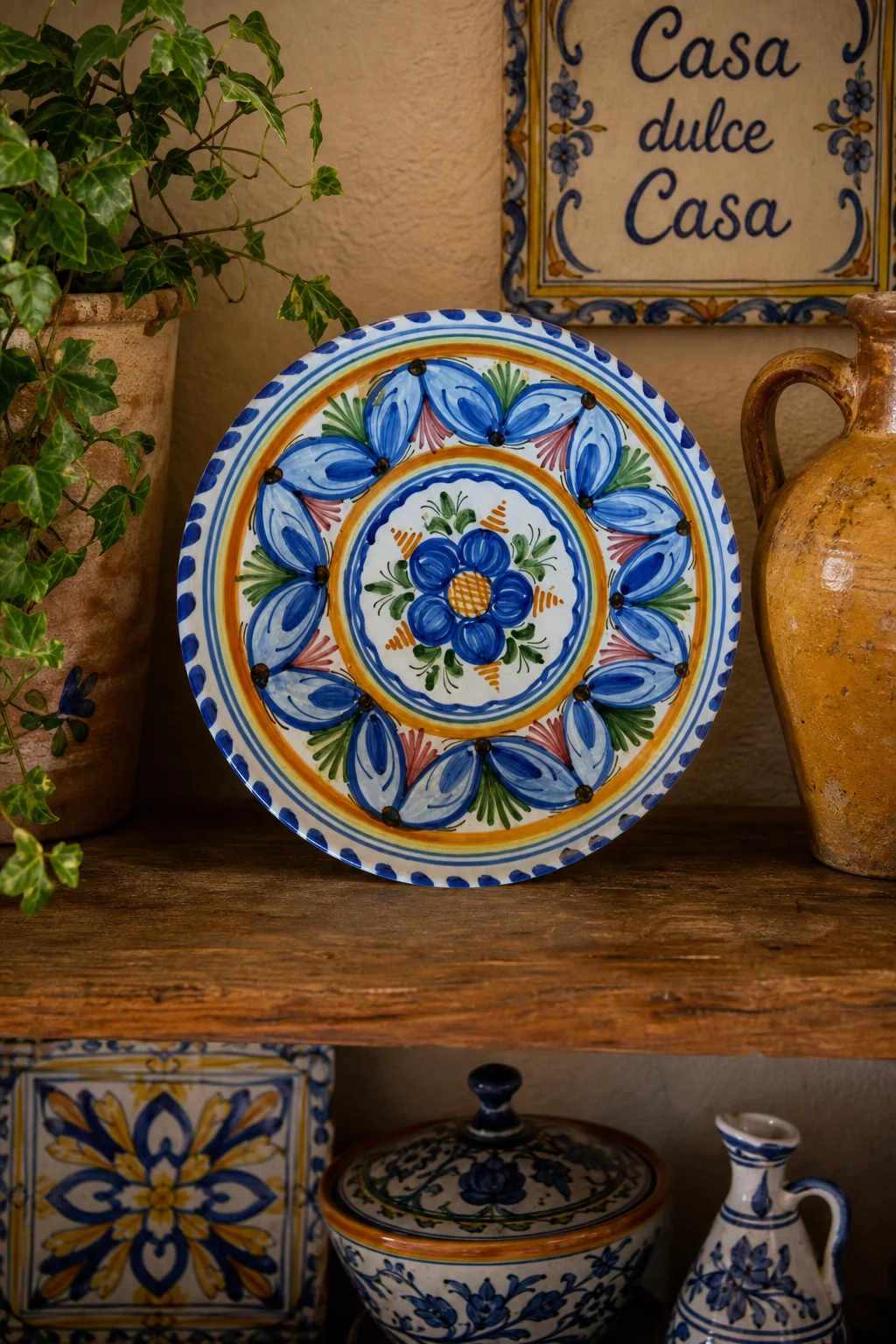
If you collect Spanish ceramic plates for example, decorate with wall plates, or enjoy hand-painted ceramics in a Mediterranean-style home, learning how to read marks is a practical skill. The most important thing to remember is that a mark is only one clue. In Spanish ceramics, there has never been a single universal marking system. Some workshops signed nearly everything. Others marked only certain pieces. Many were never signed at all.
To identify a piece with confidence, look at the mark together with the clay body, glaze, shape, weight, and decoration. A mark can help guide your eye, but the full object gives the clearest picture. When you study all of these details together, it becomes easier to understand the character of a piece and to place it more carefully within Spanish ceramic traditions.
How to Identify Spanish Pottery Marks
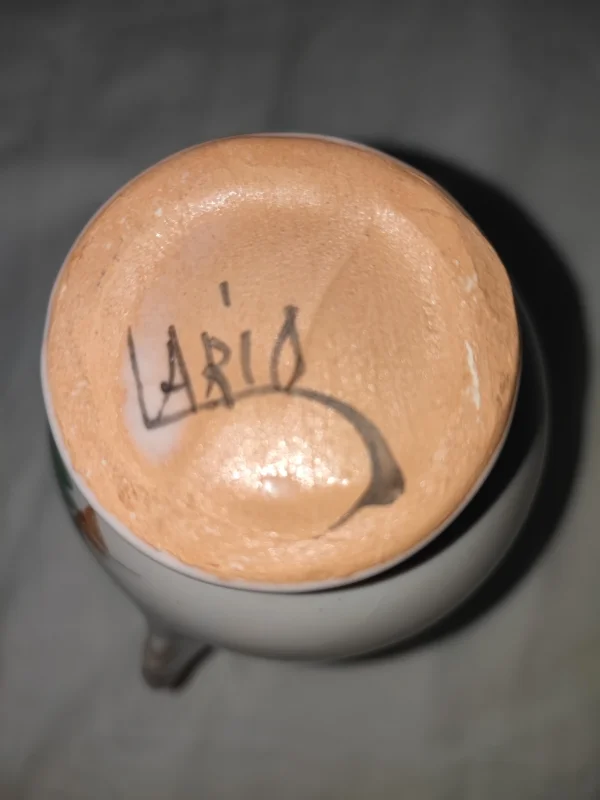
Start by looking at the type of mark. In Spanish pottery, the style of marking is often just as important as the letters, initials, or symbol themselves.
Stamped marks are pressed into the surface with a tool or stamp. These often point to a workshop, factory, or production line. Painted marks are applied by hand with brush or ink. Incised marks are cut into the clay before firing, while scratched marks may be added with a pointed tool.
Tip: If the mark looks faint, do not assume it is meaningless. A worn mark may simply reflect normal use, handling, or age.
Understand common Spanish ceramic traditions
Spain has a long and varied ceramic history, and different regions developed their own styles, clay bodies, and marking habits. Talavera de la Reina is well known for tin-glazed ceramics with a bright white base. Manises has a long ceramic tradition and is known for its own regional character. Triana in Seville also has a strong pottery history.
Use the physical piece as evidence
Clay, glaze, weight, and decoration are harder to fake than a signature or stamp. Check the clay body, study the glaze, observe the decoration, and feel the weight and shape.
How to read a difficult or faded mark
Clean the base gently, use angled light, take a close photo, and compare with trusted references.
Look beyond the bottom of the piece
Marks may appear on the bottom or foot ring, the back of a wall plate, the side or shoulder of a vase, near the rim or edge of a decorative plate, or on an unglazed or less visible area of the surface.
When a mark is not enough
Sometimes a pottery mark will not lead to a clean answer. That is normal. In Spanish pottery, uncertainty is not a failure; it is often part of the process.